When electricity connects: cables that cross continents
Hundreds of thousands of kilometers of cable span the world’s landscapes. Most of the time, they remain invisible, as they often run underground or beneath the sea. These cables overcome borders in many ways: they connect countries, enable cooperative partnerships and create joint solutions for the energy of tomorrow. We explain what these connections, called “interconnector”, are and the role they play in cross-border cooperation.
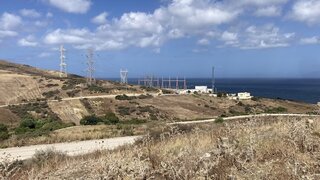
Interconnectors are power lines that connect countries across borders. They allow electricity to flow to wherever it is needed at a given time. If, at times, less electricity is fed for example into the grid in Germany, electricity from Denmark can step in. If there are bottlenecks in Poland, the German grid supplies energy. These connections are important for the energy transition. They contribute to more stable electricity prices, more stable grids and, therefore, greater energy security. However, the basic idea behind such connections is much older.
From the border triangle to the world
In the early 1960s, Germany, France and Switzerland developed a joint switchgear facility: the “Star of Laufenburg”. They connected their national electricity grids for the first time. This connection gave rise to the European electricity grid. To this day, it remains the largest interconnected electricity grid in the world. The project shows how closely energy supply, stability and partnerships are linked.
Old cables. New urgency.
Today, these lines are once again coming into focus. Despite existing climate targets, global electricity generation still relies heavily on fossil fuels such as lignite, hard coal and natural gas. In order to reduce greenhouse gas emissions in Germany and worldwide, a consistent shift to renewable energy remains the most important lever. This also means growth in cross-border electricity trading.
Back in 2018, the EU decided that by 2030, each Member State should be able to transport at least 15 per cent of its electricity generation across national borders. And with 2050 in mind, we are moving ever closer to a reality in which electricity can be generated exclusively from renewable sources. But what are the challenges?
Renewable energy is unevenly distributed
Renewable potential varies greatly from region to region. In Europe, wind turbines and well-developed electricity grids dominate. Energy partnerships on the African continent operate under different conditions: many hours of sunshine, high wind speeds and large areas suitable for the expansion of renewable technologies.
The United Nations estimates that Africa could generate significantly more electricity from renewable sources than the continent itself will need over the next 15 years. This shifts the focus away from generation and towards the use of surpluses. The key question is how countries with energy shortages can benefit from this.
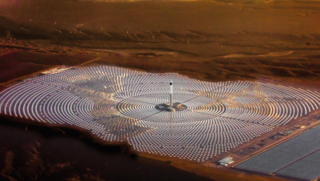
Morocco is investing heavily in renewable energies, particularly solar energy. By 2030, the country aims to cover around 52% of its electricity needs from renewable sources.
Morocco as a link
Morocco has been expanding its solar and wind energy capacity for years. It is the only African country connected to the European electricity grid via two interconnectors. The submarine cables run between Tarifa on the Spanish side and Fardioua on the Moroccan side. Most of the electricity flows from Spain to Morocco. However, thanks to the power line, Morocco was also able to supply Spain with urgently needed electricity at short notice when a large-scale power outage occurred on the Iberian Peninsula in April 2025.
International electricity connections need stable framework conditions
In 2022, France, Germany, Morocco, Portugal and Spain signed a memorandum of understanding focusing on the exchange of renewable electricity across national borders. This is of strategic importance to Morocco. Since 2009, interconnectors have been one of the three central components of the national energy strategy.
These connections strengthen the national electricity grid and support Morocco’s role as an energy hub between Africa and Europe. At the same time, they demonstrate the importance of cross-border electricity grids for energy partnerships and the expansion of renewable energy. Read more about the work of the German-Moroccan Energy Partnership PAREMA and the SET Roadmap.
Since 2009, interconnectors have been one of the three central components of the national energy strategy.
Learn more
Learn more about the role of electricity interconnections with our Morocoon Energy Partnership PAREMA